Compliance audit reporting has become a board-level priority rather than just a check-box exercise. Entities that comply with GDPR, HIPAA, SOX, PCI-DSS, ISO 27001 need to have continuous visibility, strong management of evidence, and automated compliance reporting if they want to be ahead of risks and regulators.
Robust compliance reporting tools enable organizations to centralize controls, automate evidence collection, and have the final versions of reports to help security, risk, and compliance teams demonstrate their conformity to regulators, customers, and auditors. The right reporting tool should provide the following functionalities:
- Mapping controls to different frameworks.
- Ensuring that there are always audit trails that cannot be tampered with continuous monitoring.
- Facilitating the collection and retention of audit compliance evidence through the use of automated tools.
- Producing internal and external stakeholder -oriented compliance audit reports that can be requested at any time or scheduled in advance.
Top 20 Compliance Reporting Tools
Below are the top 20 compliance reporting tools 2026 especially for data security and access governance.
- Lepide Data Security Platform
- AuditBoard
- Sprinto
- Drata
- Vanta
- Hyperproof
- LogicGate Risk Cloud
- Netwrix
- Centraleyes
- Varonis
- Diligent
- Thoropass (Formerly known as Laika)
- OneTrust
- ServiceNow GRC
- SAP GRC
- MetricSteam
- RSA Archer
- Comply Platform (formerly ComplySci)
- LogicManager
- Microsoft Purview
1. Lepide Data Security Platform
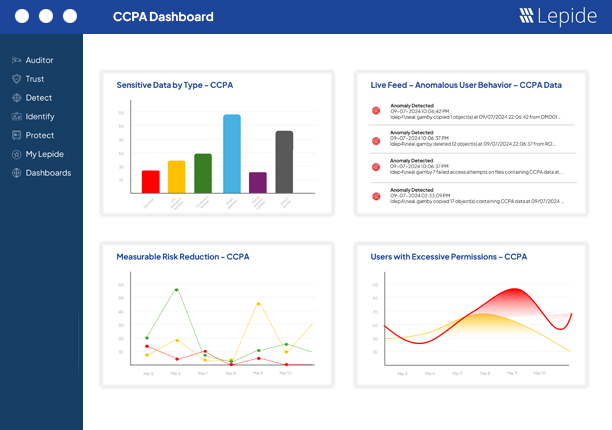
Lepide offers comprehensive auditing and monitoring functionalities, giving out automated compliance reports that are in line with regulations like GDPR, HIPAA, SOX, and PCI-DSS, and more.
Key Features
- Real-time alerts and tamper-proof audit trails.
- Pre-built compliance report templates for easy, efficient regulatory adherence and risk management.
- AI-driven analytics to identify and fix data security issues proactively, making compliance continuous.
2. AuditBoard
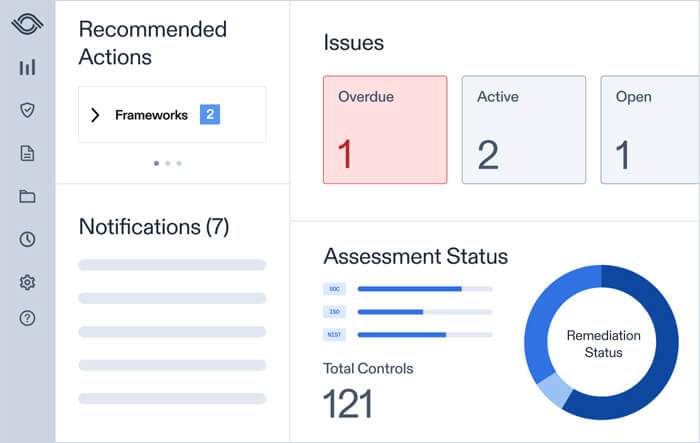
AuditBoard refers to the platform of enterprise-level features that focuses on the management of audit, risk, and compliance.
Key Features
- Centralizes and automates complex compliance audit programs.
- Integrates SOX, internal audit, operational risk, and IT compliance in one collaborative environment.
- Aligns controls with multiple frameworks to plan tests, manage issues, and produce standardized, regulator-ready reports.
- Uses automated workflows, evidence repositories, and dashboards for real-time control performance and audit status.
3. Sprinto
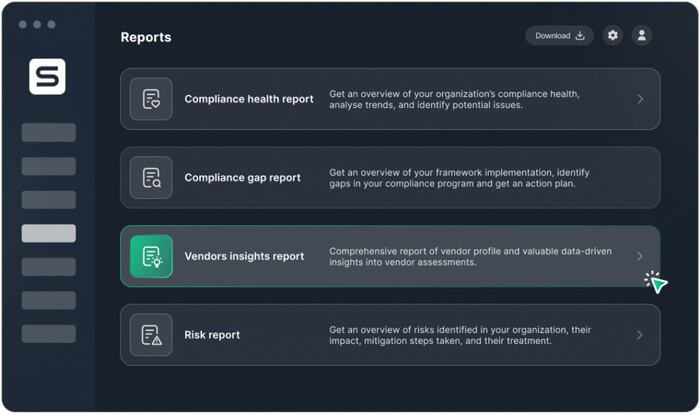
Sprinto is a cloud-native compliance automation platform that aligns well with rapidly expanding SaaS and technology companies.
Key Features
- Speeds up readiness and reporting for SOC 2, ISO 27001, GDPR, HIPAA, and PCI-DSS.
- Automates control monitoring, evidence collection, and policy workflows for continuous audit readiness.
- Simplifies audit communication with pre-built report templates and dashboards for stakeholders and auditors.
4. Drata
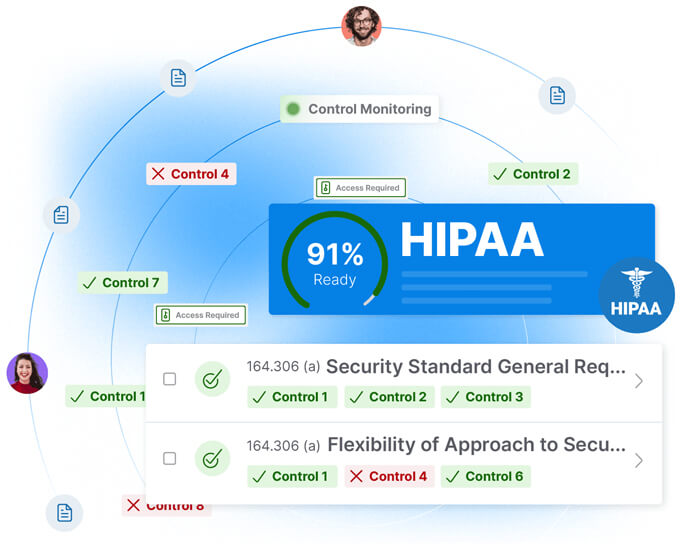
Drata specializes in continuous compliance automation as a main feature. This feature enables organizations to transition from having periodic compliance audits to always on compliance audit postures.
Key Features
- Connects with cloud infrastructure, identity providers, and security tools.
- Generates compliance reports and executive/auditor dashboards, eliminating many manual tasks.
- Builds customer trust via trust portals and external-facing reports.
5. Vanta
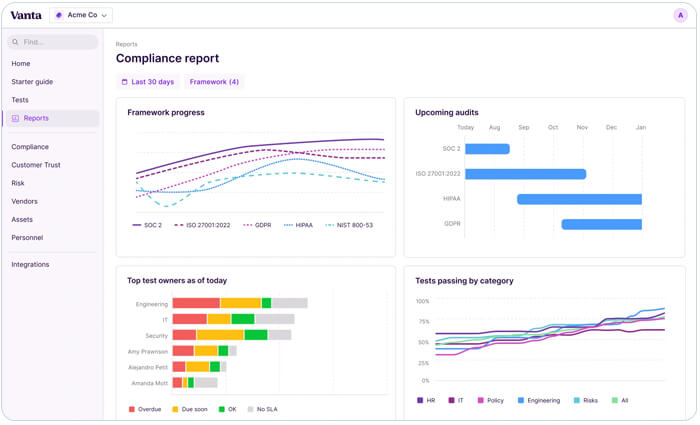
Vanta being a compliance audit automation platform, is generally recognized as approachable startups and mid-market companies and is therefore widely used.
Key Features
- Focuses on fast SOC 2, ISO 27001, HIPAA, and PCI DSS readiness.
- Maintains continuous monitoring via integrations with cloud, endpoint, and HR systems.
- Ongoing checks and alerts help teams quickly close security gaps.
- Reporting and evidence management streamline assessor reviews and security communication with prospects and partners.
6. Hyperproof
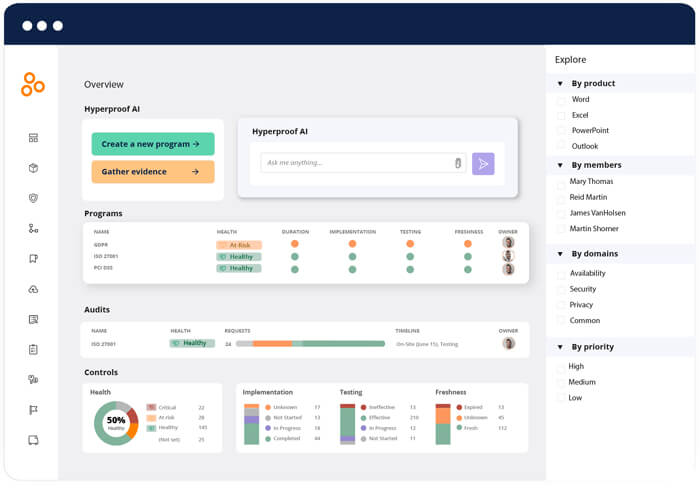
Hyperproof refers to the robust compliance operations platform designed for organizations that have to deal with multiple frameworks and complex control environments.
Key Features
- Centralizes risk registers, controls, and evidence so teams can reuse work across multiple audits.
- Tracks control maturity, testing, exceptions, and risk impact in a way both executives and auditors understand.
- Uses automation for tasks, reminders, and documentation to keep compliance audits predictable and scalable.
7. LogicGate Risk Cloud
LogicGate’s Risk Cloud is an integrated system that brings together governance, risk, and compliance in a single, adaptable platform that can be customized to the organization’s workflows for compliance audits.

Key Features
- Modular apps for risk management, policy management, third-party risk, and compliance reporting.
- Reporting engine shows control performance, open issues, and risk exposure for audit and leadership.
- Custom workflows manage reviews, approvals, and evidence collection per internal and regulatory requirements.
8. Netwrix
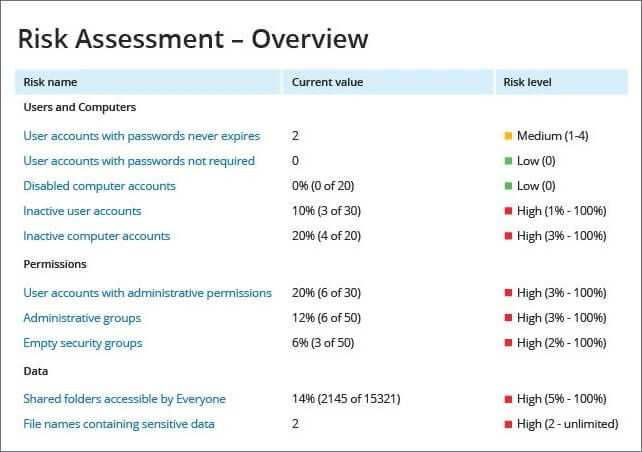
Netwrix is a company that provides services focused on visibility and reporting of the IT infrastructure, user activity, and data access that makes it very potent for IT-centric compliance audit requirements.
Key Features
- Detects configuration drift, excessive permissions, and unusual activity that could cause non-compliance or security incidents.
- Provides out-of-the-box reports mapped to GDPR, HIPAA, PCI DSS, and SOX for fast, audit-ready evidence.
- Delivers detailed audit trails for deep, technical compliance audits.
9. Centraleyes
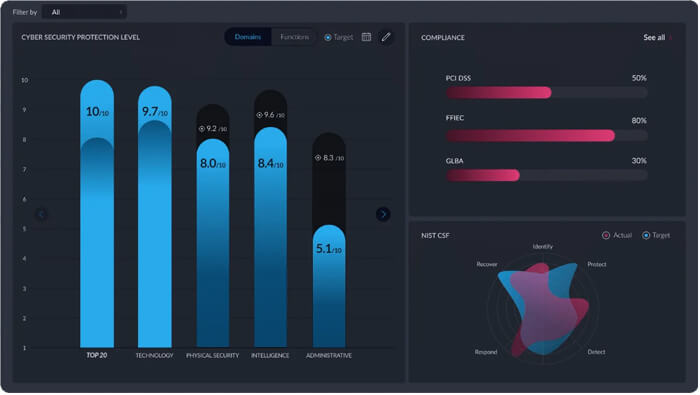
Centraleyes is a risk and compliance management platform that uses automation and analytics to make compliance audit projects less complex and more efficient.
Key Features
- Central hub for assessments, control tracking, and remediation across frameworks.
- Configurable dashboards, benchmarking, and custom reports to show risk and compliance.
- Ideal for organizations with overlapping regulatory obligations.
10. Varonis
Varonis is a company that offers end-to-end data protection that goes beyond visibility, offering automated results to lower risk, uphold regulations, and thwart active threats.

Key Features
- Simplifies compliance management
- Provides Real-time visibility and control over critical data.
- Provides pre-built, accurate classification policies, specific to regulations such as NIST, HIPAA, SOX, and GDPR.
- Accelerates cross-platform security investigations for cloud and on-prem environments and assists with data breach reporting.
- Provides Live risk dashboards and on-demand compliance reports.
11. Diligent
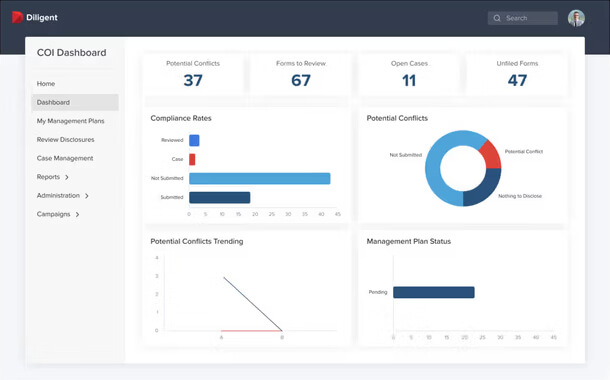
Diligent compliance and risk platform (often associated with the HighBond suite) is a comprehensive solution that caters to enterprise-level audit, risk, and compliance audit requirements.
Key Features
- Facilitates risk evaluations, policy management, incident recording, and regulatory change management.
- Provides advanced reporting and analytics to show audit results, key risk indicators, and control effectiveness.
- Ideal for highly regulated industries needing organized, provable assurance for regulators and investors.
12. Thoropass (Formerly known as Laika)
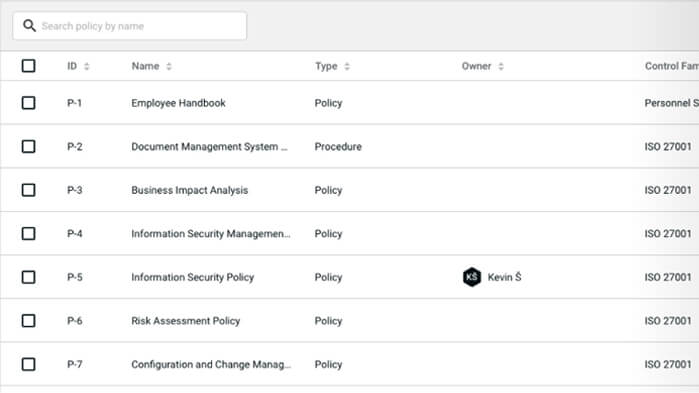
Thoropass is a compliance and security platform created to support organizations in the operationalization and scaling of programs regarding SOC 2, ISO 27001, HIPAA, and other frameworks.
Key Features
- Centralizes policies, controls, and evidence, with guided workflows and task management for audit preparation.
- Helps stakeholders see readiness, identify gaps, and prioritize remediation.
- Especially useful for growth-stage companies.
13. OneTrust
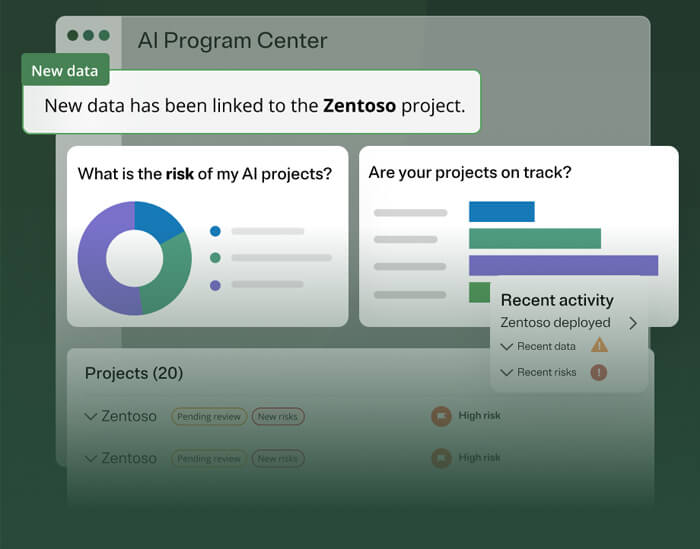
OneTrust is a wide intelligence platform that covers various areas such as privacy, data governance, GRC, and third-party risk.
Key Features
- Powerful features for compliance audits, including privacy impact assessments, consent management, data mapping, and regulatory reporting.
- Maintains processing records, tracks risks, and generates regulator-facing compliance documentation.
- Dashboards and reports give continuous visibility into privacy posture and obligations.
14. ServiceNow GRC
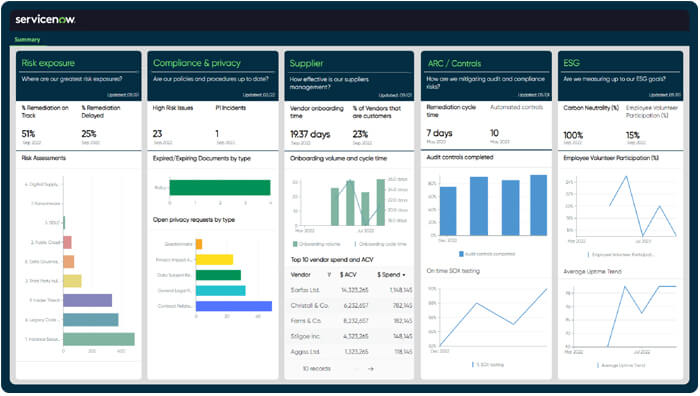
ServiceNow GRC integrates ServiceNow platform with risk, compliance, and policy management thus, it is perfect for big organizations that have already invested in ServiceNow workflows.
Key Features
- Tracks compliance requirements for audits by aligning incidents, changes, and assets.
- Enables standardized control testing, risk assessments, and issue remediation.
- Provides live compliance dashboards for different business units.
- Links operational events directly to governance requirements.
15. SAP GRC
SAP GRC is a set of solutions that cover Governance, Risk, and Compliance mainly for the scenario where the organizations are running critical processes on SAP. Access control, segregation of duties, and process-level risk in finance and operations.
Key Features
- Monitors controls, runs automated violation checks, and offers standard reports for financial and operational audits.
- Well suited for SOX and scenarios where financial system controls must be clearly demonstrated and easily repeatable.
16. MetricSteam
MetricStream provides a corporate GRC platform that is specially designed to meet the challenges of a comprehensive compliance audit program for a global organization with multiple regulators and jurisdictions.

Key Features
- Unifies risk management, internal audit, compliance, and policy management in one environment.
- Harmonizes reporting on audit results, risk metrics, and remediation across departments.
- Provides management with a bird’s-eye view of risk and compliance.
- Supports drill-down into detailed audit and control information.
17. RSA Archer
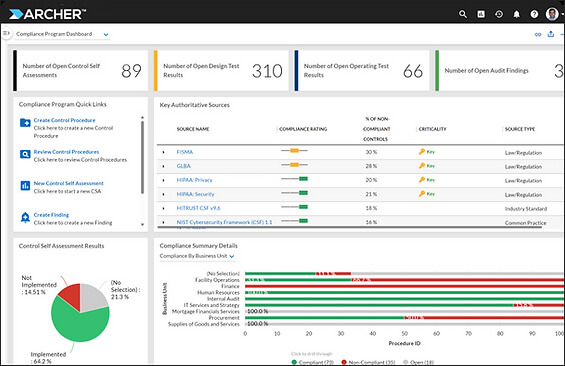
RSA Archer is a full-scale GRC platform with the features that originated from risk and compliance management, especially for regulated industries such as financial services and healthcare.
Key Features
- Supports IT, enterprise, third-party risk, and regulatory compliance use cases.
- Offers centralized control libraries, workflow-based assessments, and flexible reporting.
- Tracks and measures audit findings, issues, and corrective actions across the full compliance lifecycle.
18. Comply Platform (formerly ComplySci)
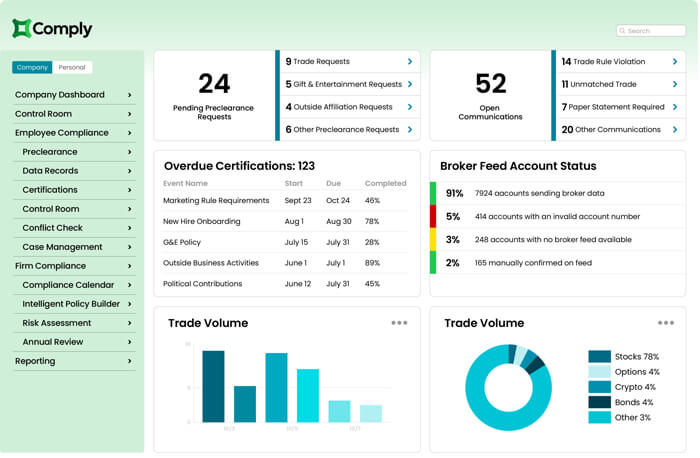
Comply Platform is very much centred around providing the best compliance solutions to financial services.
Key Features
- Manages employee conflicts of interest, personal trading, and regulatory obligations in investment and advisory businesses.
- Automates monitoring and approval of employee activity.
- Provides detailed audit trails by recording events, sending notifications, and evidencing policy enforcement.
- Enables compliance officers to easily demonstrate proper supervision and controls to regulators and internal auditors.
19. LogicManager
LogicManager is an enterprise risk and compliance management software solution that puts special emphasis on the “risk-based” aspect of compliance.
Key Features
- Aligns control coverage and testing frequency with risk levels instead of treating all requirements equally.
- Provides audit reports by risk scores, control effectiveness, and testing results.
- Designed to meet board and regulator expectations for risk-driven, not checklist-based, compliance programs.
20. Microsoft Purview
By using Microsoft Purview, companies can easily tackle the challenges of data discovery, classification, access control, and information protection across Microsoft 365, Azure, and multi-cloud/hybrid environments.
Key Features
- Helps address sensitive data sprawl and regulatory compliance
- Offers data maps, labeling, DLP policies, and compliance portals for frameworks like GDPR and HIPAA
- Provides reports on where sensitive data resides, how it is used, and policy adherence, linking internal reviews with external audits
How to choose a Compliance Reporting Tool
Not every organization requires an identical level of complexity or coverage for their compliance audit program. There are some which are focused only on certifications like SOC2 and ISO 27001, whereas others must handle a multitude of regulators in several different locations. While picking up compliance reporting tools, it would be wise to think about:
Key Features
- Framework coverage: Which standards (GDPR, HIPAA, PCI DSS, SOX, ISO, sectoral regulations) are the most important for your compliance audit obligations.
- Integration landscape: Does the tool have the capability to integrate with your cloud platforms, identity systems, ticketing tools, and security stack in order to automate evidence collection?
- Reporting and Dashboards: Are you able to quickly create compliance audit reports for executives, regulators, and customers without any manual compilation?
- Scalability and usability: Can business and IT stakeholders through the platform effectively manage daily compliance audit tasks rather than the compliance team only?
Conclusion
The proper compliance reporting tools make a compliance audit a routine, data-driven discipline rather than a chore. Tools like AuditBoard, Sprinto, Drata, Hyperproof, LogicGate etc. assist in coordinating frameworks, controls, and stakeholders at a large scale where a tool like Lepide offers the detailed, technical evidence regarding data security that auditors and regulators are increasingly looking for.
With the continuous change in regulations and the increase in enforcement, companies that decide to build a unified compliance audit stack integrating framework management, risk analytics, and detailed data security reporting will be the ones to demonstrate compliance effectively, gain customer trust, and be able to respond to new requirements quickly. Lepide is instrumental in such a network by converting less visible data access patterns into transparent, actionable, and audit-ready insight.
FAQs
Q1. What is a compliance management reporting tool?
Ans. A compliance management tool is designed to help organizations in the automation of tracking, documentation, and reporting of their regulatory and policy compliance with internal and external requirements to reduce the manual work and at the same time to speed up audit readiness.
Q2. How do these tools simplify compliance reporting?
Ans. They offer automated evidence gathering, ready regulatory report templates, live control monitoring, and flexible dashboards that help in the quick and accurate audit-ready reports, thus enhancing the level of compliance preparedness and quality.
Q3. Can these tools integrate with existing IT systems?
Ans. Yes, most of the top compliance tools can be integrated smoothly with cloud platforms like Azure, Google Cloud, and SaaS apps like Microsoft 365, On- premises systems, databases, and endpoint devices through APIs.
Q4. How do these tools support continuous compliance?
Ans. By implementing continuous control assessment, constantly updating evidence, and automating the issuance of tasks, such tools keep the compliance status always up to date, hence they are very useful for organizations looking to maintain audit readiness throughout the year.
Q5. Are these tools suitable for all business sizes?
Ans. Most of the tools can be scaled up and down from a small business context to that of a large enterprise and they provide an adaptive compliance framework and customizable workflows that are suitable for the size and complexity of the organization.