












Identify users with excessive permissions, inactive accounts, and privileged access before sensitive customer, employee, and operational data is exposed across your environment.
Track user activity, failed logons, permission changes, and unusual access patterns in real time to improve visibility into how personal data is accessed and used.

Maintain searchable audit trails and visibility into user activity across Active Directory, Microsoft 365, and file servers to support CCPA accountability and data protection requirements.
| CJIS requirement | Policy / section / article | How Lepide helps |
|---|---|---|
| Implement and maintain reasonable security procedures and practices. | California Civil Code §1798.150(a)(1) | Follow the Principle of Least Privilege (PoLP) when assigning user permissions, monitor excessive permissions, suspicious behavior, and privileged access to reduce the risk of unauthorized access to consumer data. |
| Protect personal information from unauthorized access, disclosure, or theft. | California Civil Code §1798.150(a)(1) | Identify over-permissioned users, inherited access, dormant accounts, and privileged users across Active Directory, Microsoft 365, and file servers. Monitor user activity for anomalous behavior. |
| Consumer right to know what personal information is collected and accessed. | California Civil Code §1798.100 | Maintain visibility into access to sensitive files, folders, and repositories containing consumer and personal data. Scan repositories to locate files containing Personally Identifiable Information (PII) |
| Consumer right to delete personal information. | California Civil Code §1798.105 | Track access, ownership, and activity associated with sensitive consumer data across hybrid environments. Report on data held for individuals. |
| Consumer right to limit disclosure and access to personal information. | California Civil Code §1798.120 | Strengthen least privilege policies and reduce unnecessary access to sensitive consumer and operational data. |
| Accountability and monitoring of access to personal information. | California Civil Code §1798.150 | Maintain searchable audit trails and centralized visibility into user activity, permission changes, and access to sensitive data. |
| Detect and respond to unauthorized access or misuse of personal information. | California Civil Code §1798.150(a)(1) | Detect suspicious behavior and accelerate investigations through anomaly spotting, real-time alerts, centralized auditing, and visibility into user activity. |
| Monitor privileged users and authentication activity. | California Civil Code §1798.150(a)(1) | Track privileged account activity, failed logons, and suspicious authentication behavior across hybrid environments. |
It is crucial that the Principle of Least Privilege (POLP) is adhered to when assigning user permissions to give only the bare minimum required for users to do their job. This enables organizations to protect consumer and personal data as they will understand and have visibility over who has access to what.
Lepide helps security and IT teams to assign and manage permissions by providing visibility across Active Directory, Microsoft 365, and hybrid environments. This includes identifying excessive access, and monitoring user activity to comply with CCPA privacy and data protection requirements.
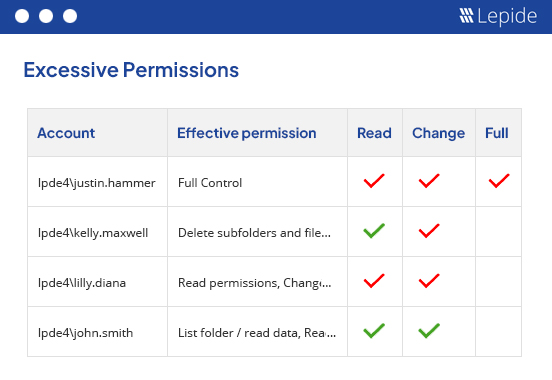
Understand exactly who can access customer, employee, financial, and operational data across your environment. Lepide helps organizations identify excessive permissions, reduce unnecessary access, and strengthen least privilege policies without disrupting day-to-day operations.
Track user behavior, failed logons, permission changes, group membership changes, and unusual access patterns across Active Directory, Microsoft 365, and file servers through centralized auditing and real-time visibility.
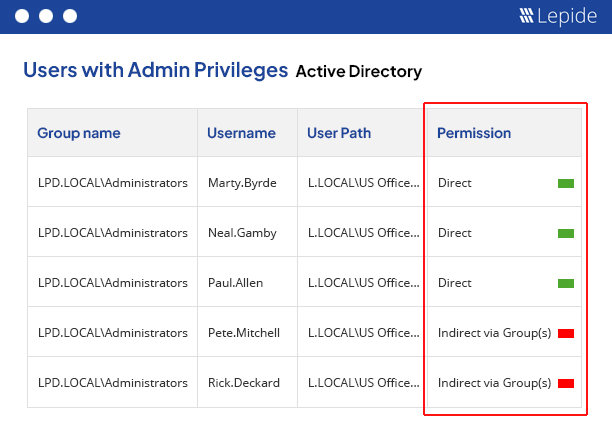
Quickly investigate suspicious behavior, privileged account misuse, and unauthorized access attempts through searchable audit trails, real-time alerts, and centralized visibility into user activity across hybrid environments.
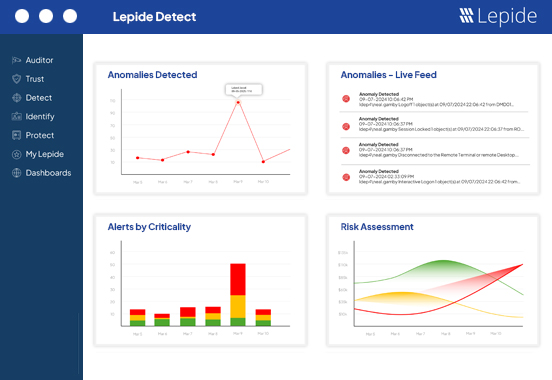
Maintain visibility into user activity, permission changes, privileged groups, and access to sensitive consumer data across Active Directory, Entra ID, Microsoft 365, and file servers to support CCPA accountability and data protection requirements.
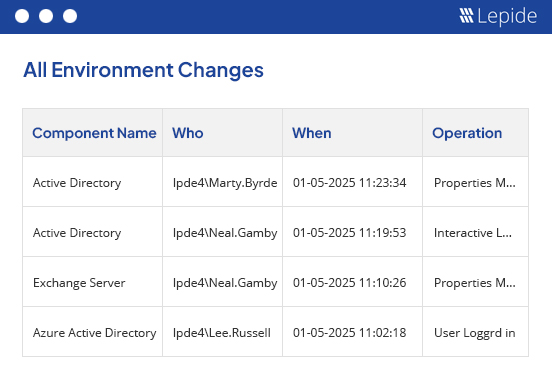
Identify risky access patterns, excessive permissions, inactive accounts, and suspicious behavior before they lead to unauthorized access or consumer data breaches. Lepide helps organizations improve visibility into how sensitive consumer data is accessed and used across hybrid environments.
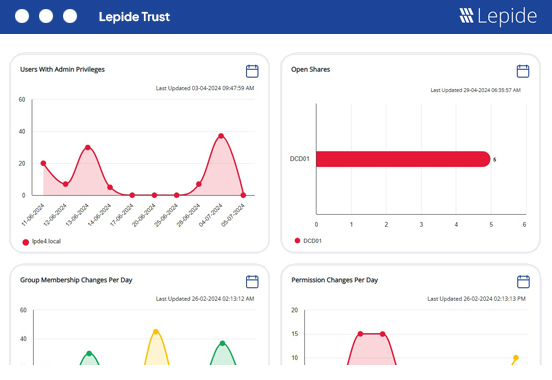
From CISOs to SecOps teams, find out how the NIST Cybersecurity Framework is evolving and what you should be doing to achieve and maintain a compliant cybersecurity posture.
Get the free guide now!